Annual Report2025

The first full year of Mongolia’s conservation trust fund and the Eternal Mongolia programme.

In 2024, the Foundation was established. In 2025, we became fully operational.

MNLF Annual Report 2025 poster displayed outdoors among trees

A conservation trust fund in its first full year.

The Mongolian Nature’s Legacy Foundation was established in March 2024 as Mongolia’s first conservation trust fund, created to manage the donor funds committed to Eternal Mongolia and to channel long-term finance into the country’s protected areas.

This report records how we built our governance and systems, disbursed our first grants, and worked with government and partners on the policy and financing reforms that permanent conservation depends on.

“The year 2025 marked the Foundation’s first full year of operations, since its establishment in March 2024 on the eve of the launch of Eternal Mongolia, and a pivotal transition from preparation to delivery.”

Boldoo MagvanBoard Chair, Mongolian Nature’s Legacy Foundation

Inside the report

Six chapters on how we spent our first full year.

Building the Foundations From page 14

Before we could move capital, we had to prove we could govern it.

In 2025, we put our governance structures, Secretariat, operational policies, and management systems in place: a Board drawn from four sectors, standing committees, a full suite of governance and safeguard policies, and a Grant Management and Monitoring System that makes every grant traceable.

In this chapter

  • Board composition and committees
  • The Secretariat
  • Policies and manuals adopted
  • Grant Management and Monitoring System
  • The global conservation trust fund community
Read this chapter, Building the Foundations
Eternal Mongolia PFP From page 16

One programme, fifteen years, and the financing to keep protection in place.

Eternal Mongolia is a Project Finance for Permanence initiative between the Government of Mongolia, The Nature Conservancy, and MNLF. International donors provide USD 71 million through a transition fund and an endowment, while the Government commits revenue from sustainable finance mechanisms over the life of the programme.

In this chapter

  • Financing architecture
  • The four-year plan
  • Implementation structure
  • Goals and milestones
Read this chapter, Eternal Mongolia PFP
Grants Programme From page 36

Our first grants reached the ground.

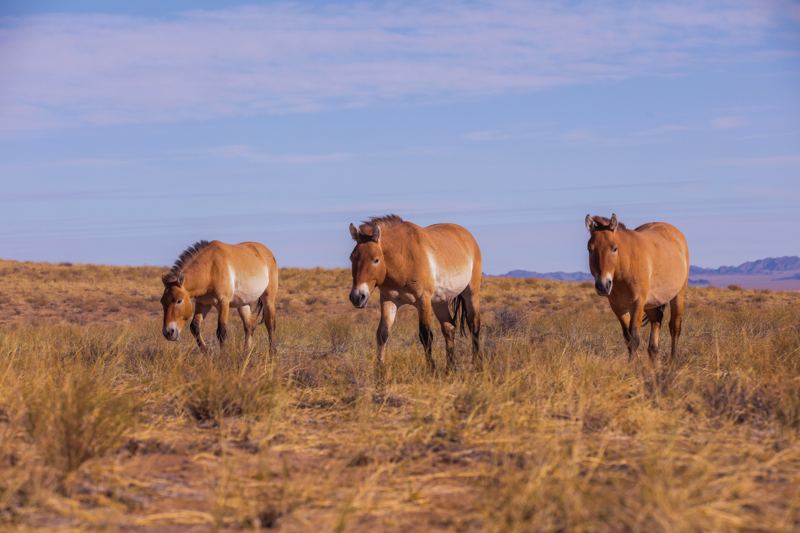
We awarded our first focal park grant to Khomyn Talyn Takhi, where the Przewalski’s horse population reached 157 and Khomyn Tal was designated a UNESCO Biosphere Reserve in September 2025. We designed the Protected Areas Accelerator Programme to sequence grant-making, technical support, and institutional readiness.

In this chapter

  • Khomyn Tal National Park
  • The first competitive grant round
  • Protected Areas Accelerator Programme
  • Expected results
Read this chapter, Grants Programme
Enabling Policy Change From page 20

Writing the rules that let conservation pay for itself.

We worked with the Ministry of Environment and Climate Change and the Ministry of Finance on results-based environmental budget reform, on channelling the corporate income tax provision to conservation, and on the design of a conservation and tourism levy. We also launched the Nature Positive Business Coalition in December 2025.

In this chapter

  • Revising the Law on Protected Areas
  • Corporate income tax channelling mechanism
  • Conservation levy
  • Nature Positive Business Coalition
  • Biodiversity offsets
Read this chapter, Enabling Policy Change
Protecting Mongolia’s Wild Places From page 27

From assessment to decision on the road to 30 percent.

Citizens’ Representative Khurals issued local approval decisions covering 2.48 million hectares, and we submitted locally endorsed designation materials for 18 of 21 proposed protected areas to the Ministry. A national assessment prioritised 430 local protected areas for their ecological and cultural value.

In this chapter

  • Progress toward 30x30
  • Local government approvals
  • Local protected area assessment
  • Spatial conservation assessment
  • Economic valuation study
Read this chapter, Protecting Mongolia’s Wild Places
Improving Management Effectiveness From page 30

Knowing where the system stands before investing in it.

The first comprehensive national baseline of protected area management effectiveness covered all 76 public protected areas, developed with IUCN and local experts. It found that only 29 have active management plans, and that 9 percent of budgets go to conservation activities.

In this chapter

  • National protected area baseline
  • Management planning review
  • Readiness self-assessment tool
  • Co-management models
  • Coordination and knowledge sharing
Read this chapter, Improving Management Effectiveness
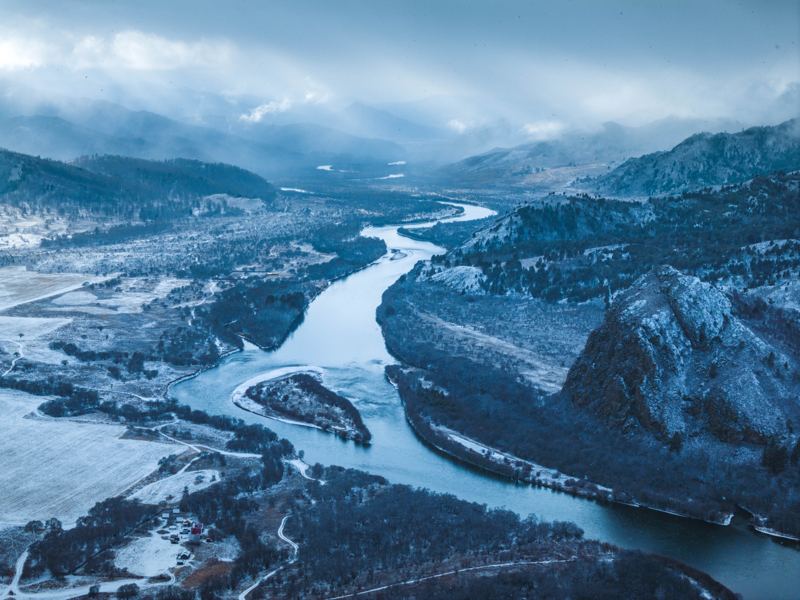
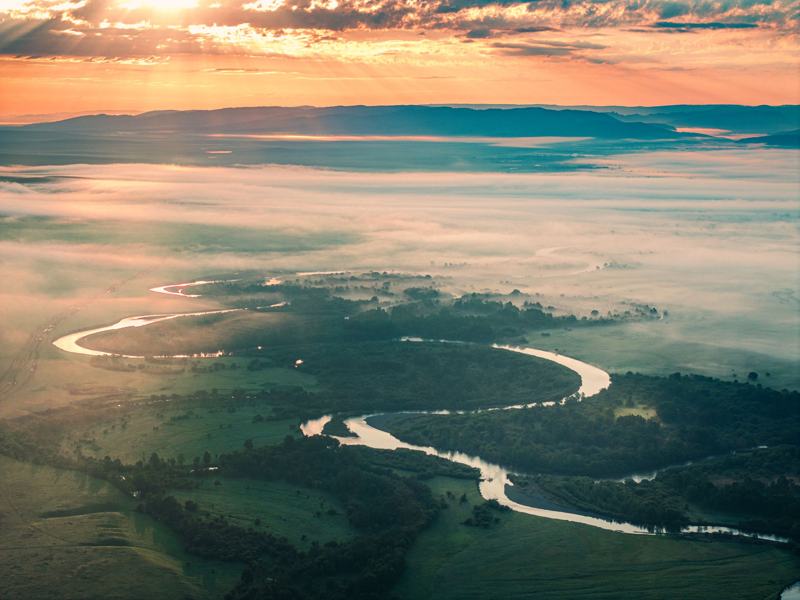
A river winding through the steppe at dawn, seen from the air

Also in the report

  • Foreword from the Board Chair
  • Year one at a glance
  • International knowledge exchange
  • Financial overview
  • Acknowledgements

2025 in numbers

Year one at a glance

Results across the programme in 2025, achieved with the Government of Mongolia, the Ministries, The Nature Conservancy, grantees and our partners.

  • 430 Local protected areas assessed
  • 72 Protected areas assessed and engaged
  • 450+ Protected area, civil society and other officials and staff trained
  • 157+ Przewalski’s horses at Khomyn Tal, 96 percent native-born
  • ₮142.7M Revenue from sustainable tourism at the Takhi Ecolodge
  • UNESCO Khomyn Tal designated a Biosphere Reserve, September 2025